Transforming Diabetes Care Through Frontline Primary Care Workforce Education, Capacity Building, and Quality Improvement
EDAN Receives Alaska Rural Health Transformation Subaward
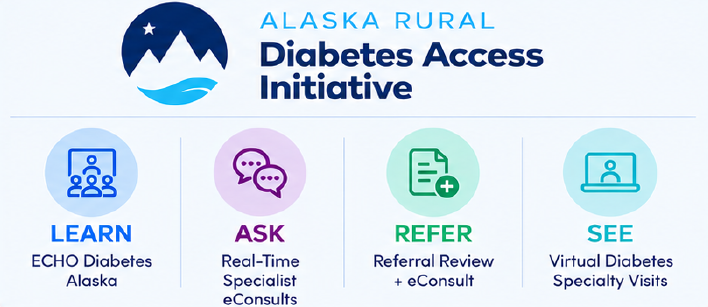
This statewide effort is designed to expand diabetes care access and strengthen local clinical expertise across Alaska. In collaboration with UAA Center for Human Development, Project ECHO®, Center for Health Care Strategies, PicassoMD, and Facet Health, EDAN will connect primary care clinicians and healthcare teams with peer support, interprofessional specialist-led learning, eConsults, and virtual specialty care.
EDAN Launches the Alaska Rural Diabetes Access Initiative
Join a statewide initiative connecting Alaska clinicians and health professionals with ECHO-based learning, specialist eConsults, and virtual diabetes specialty care - at no cost to participating sites and clinicians.
Strengthening Diabetes Care Starts with Equipping Frontline Primary Care Teams
Diabetes is a major public health problem. In the U.S. 1 in 8 people live with diabetes. An estimated 8 in 10 individuals with prediabetes are unaware of their condition. Individuals living in rural and medically under-resourced communities often face limited access to specialty diabetes care, increasing their risk of preventable complications.
Primary care clinicians provide the majority of diabetes care in the U.S.—an estimated 90% of individuals living with diabetes receive care from frontline primary care teams rather than specialists. As the national burden of diabetes continues to grow, strengthening the capacity of primary care is essential.
The Project ECHO® Model is a proven tele-mentoring approach that connects specialists with frontline clinicians to expand specialty-level expertise within primary care. Through case-based learning and ongoing mentorship, ECHO strengthens workforce capacity and improves patient outcomes.
Rural Health Transformation Program (RHTP): A Timely Opportunity to Expand Diabetes ECHO PROGRAMS AND strengthen RURAL HEALTH
More than a dozen states have included Project ECHO in their RHTP applications. The Center for Health Care Strategies (CHCS) tip sheet on Project ECHO outlines how states can leverage Medicaid innovation to improve care delivery, strengthen access, build workforce capacity, and promote long-term sustainability in rural communities.
The RHTP provides a timely opportunity to scale diabetes-related Project ECHO® programming nationwide. While many states have incorporated Project ECHO into their RHTP strategies, diabetes-focused programming has historically been limited nationwide due to competing priorities and resource constraints.
By intentionally prioritizing diabetes within ECHO initiatives, states can strengthen frontline primary care capacity, extend specialty expertise into rural and medically underserved communities, and improve outcomes for individuals living with diabetes and related conditions.
EDAN serves as a strategic and technical assistance partner to ECHO hubs and state RHTP partners, supporting the design, launch, and long-term sustainability of diabetes-focused ECHO initiatives aligned with workforce development, specialty access, and value-based care priorities.
ECHO Diabetes Action Network
The ECHO Diabetes Action Network (EDAN) strengthens diabetes care by democratizing access to diabetes specialty-level expertise within primary care settings. Through the Project ECHO® model, we equip frontline teams with the knowledge and mentorship needed to deliver high-quality care locally—particularly in rural and remote communities—while improving outcomes and strengthening the clinical workforce.


What is Project ECHO®?
Project ECHO® is a proven, scalable telementoring model that connects multidisciplinary specialists with frontline health care professionals to strengthen local capacity for managing complex conditions like diabetes. Through case-based learning and ongoing mentorship, ECHO enables primary care teams to deliver high-quality care in their own communities—particularly in rural and medically underserved areas